
 Angles & Flats


 Beams & Pipes


 Plates


 Surface treatment


 Robotic welding

 Software
 Presses


 Shearing


 Sawing


 Automation

 Contact us
 Find a machine
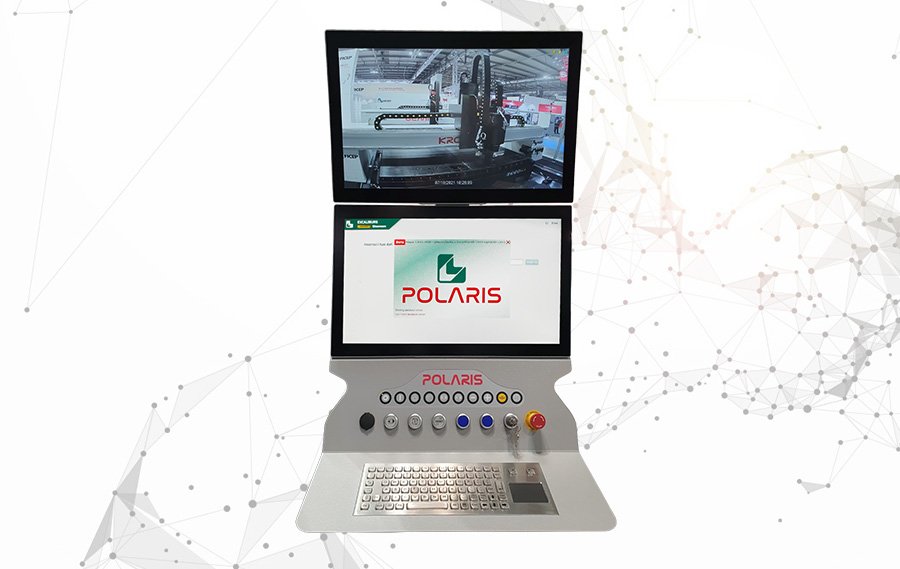
The structured availability of data and the integration between PLM, factory management and energy monitoring now represent the operational foundation for FICEP to optimize productivity and maintenance in plate processing.
This approach combines long-standing mechanical engineering expertise with an advanced digital infrastructure, designed to support the connected workshop.
Alongside a comprehensive range of solutions for structural steel fabrication, FICEP has progressively developed software platforms and digital environments to enable the integrated management of production processes.
ARTIFICIAL INTELLIGENCE AS A LEVER FOR OPTIMIZATION
In the plate processing sector, artificial intelligence is taking on an increasingly operational role, moving beyond its function as an advanced data-analysis support tool to become a strategic instrument for process optimization.
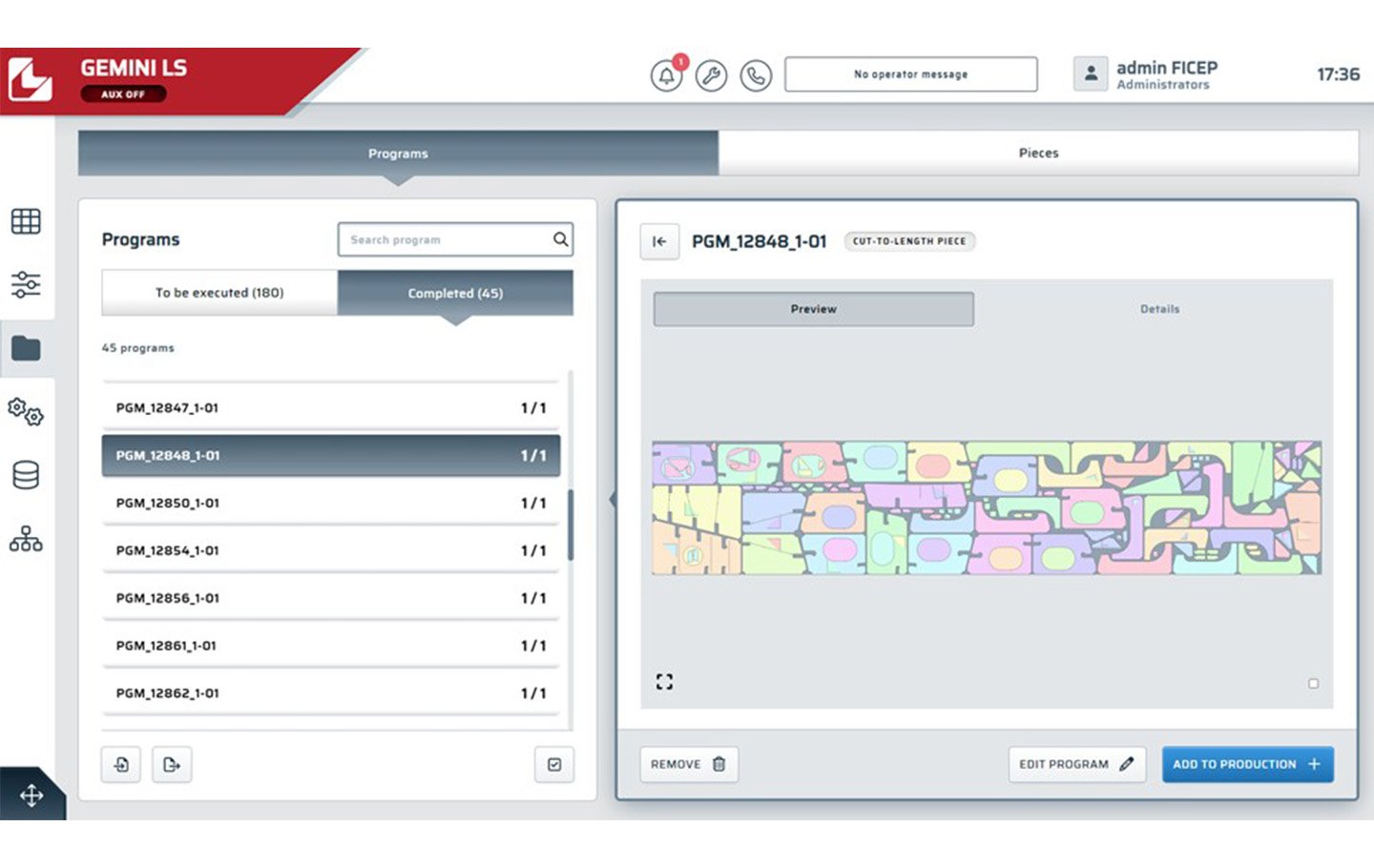
A practical example is represented by intelligent nesting solutions, which go beyond traditional geometric algorithms and help reduce scrap, machine time and material usage in inventory, also thanks to the ability to learn from previous production runs.
Through Steel Projects PLM, Polaris HMI and Polaris IoT technologies, FICEP machines provide a complete digital infrastructure capable of integrating production planning, process management, advanced data collection and analysis, and digital services within a coherent ecosystem.
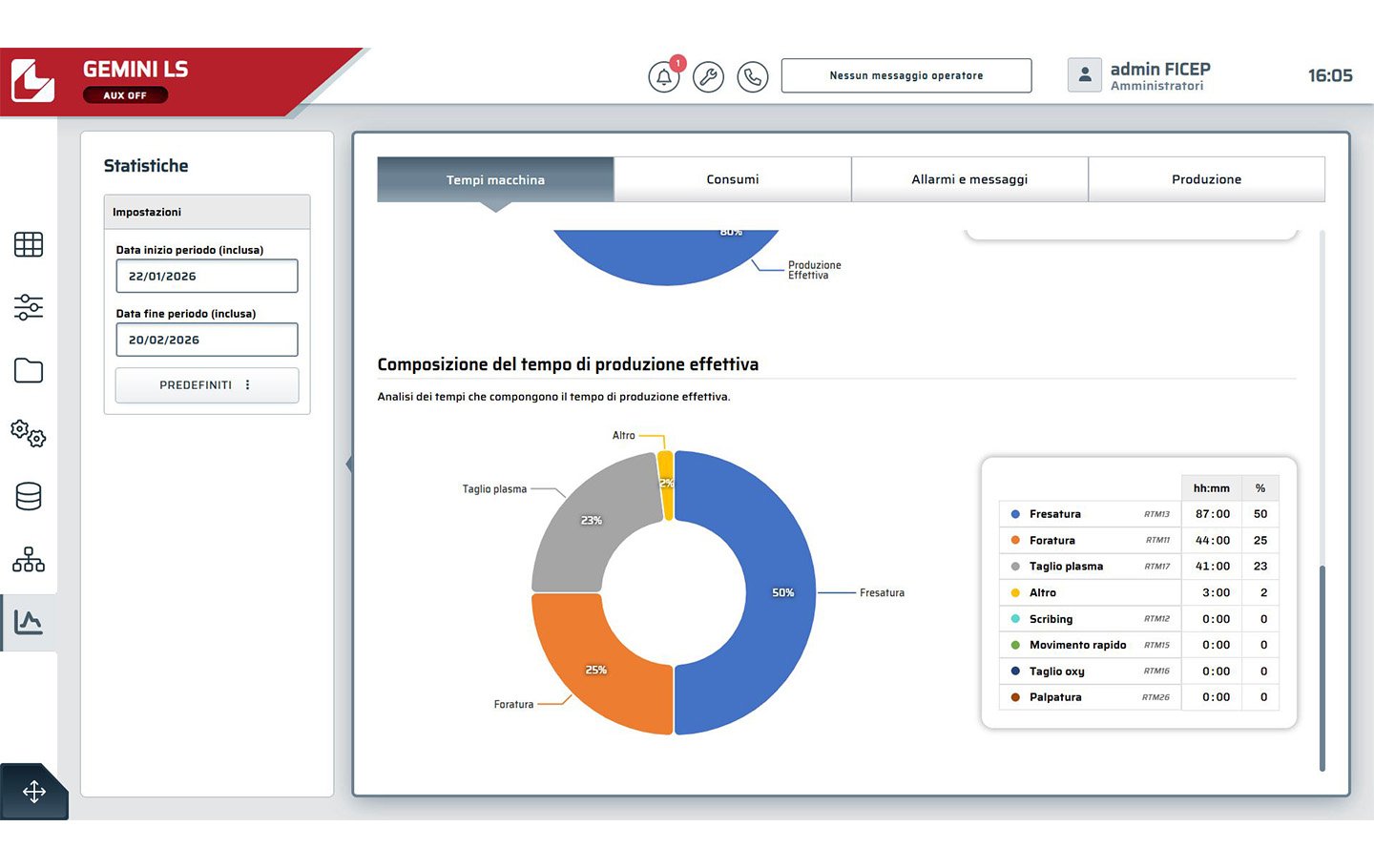
Today, AI supports analytical processing across several operational areas. In process control, the continuous analysis of machine parameters, cycle times, alarms and production performance feeds real-time dashboards with key indicators such as OEE, availability, productivity, quality and plant utilization.
On this basis, optimization algorithms can balance job flows among available machines, eliminating bottlenecks and increasing the overall productivity of the plant.
PREDICTIVE MAINTENANCE: WHEN DATA PREVENTS MACHINE DOWNTIME
A particularly relevant area is predictive and proactive maintenance. Structured machine data collection, combined with secure remote access, enables the identification of performance drifts and the activation of targeted interventions before productivity drops or equipment stops occur.
True predictive maintenance exists when the system can estimate with high probability which component is approaching the end of its useful life and within what timeframe an intervention will be required.
This goes beyond simple operating hour counts and relies on continuous monitoring of machine parameters, realistic (and often complex) degradation models, and correlations between multiple data sources: processed material, type of process, motion control parameters, and power consumption.
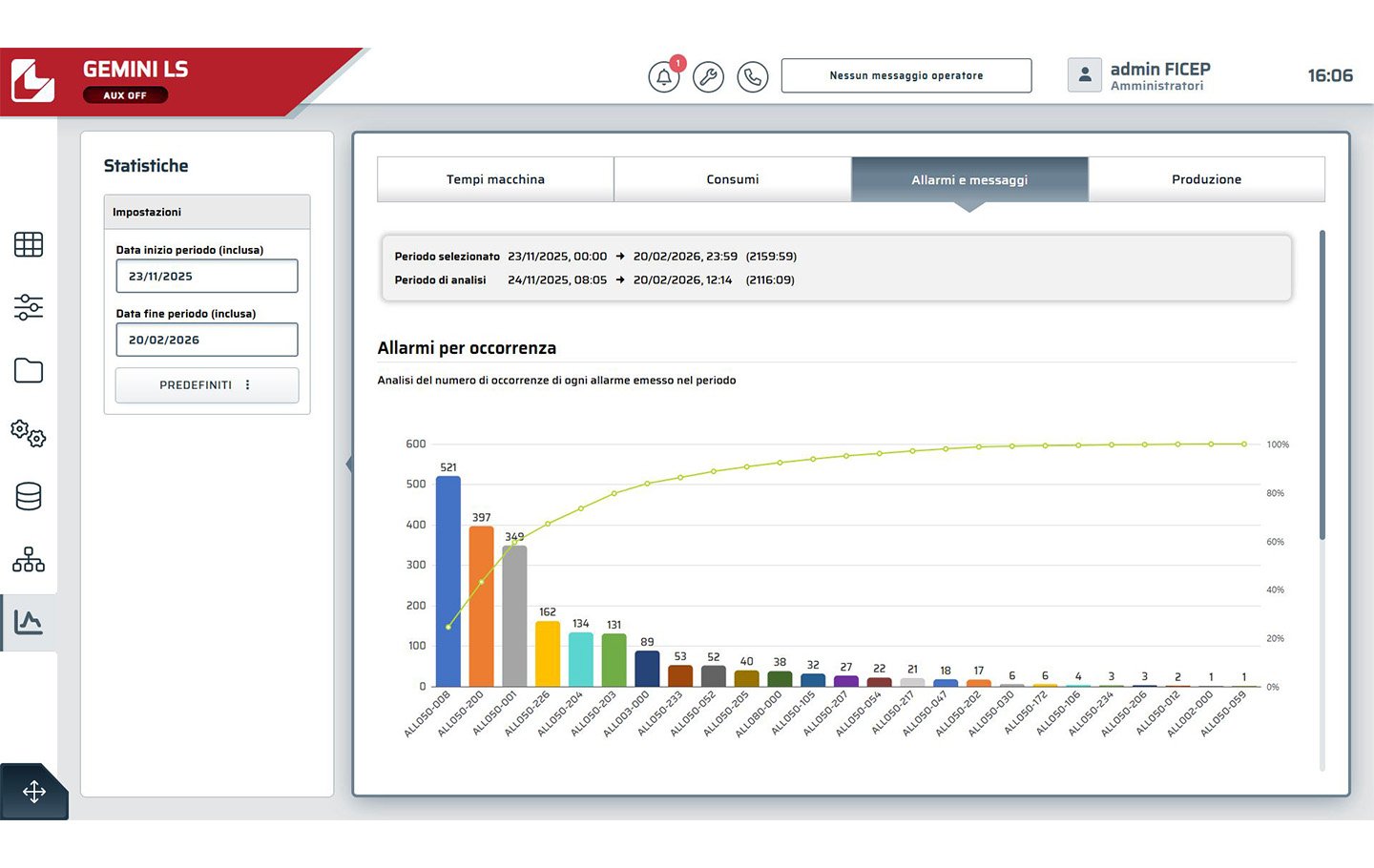
Advanced alarm management, which links each event to potential causes and solutions, already represents a first level of intelligence applied to decision support, guiding operators toward targeted actions before unscheduled downtime occurs.
APPLICATION CASE: TOOL WEAR AND EARLY REPLACEMENT
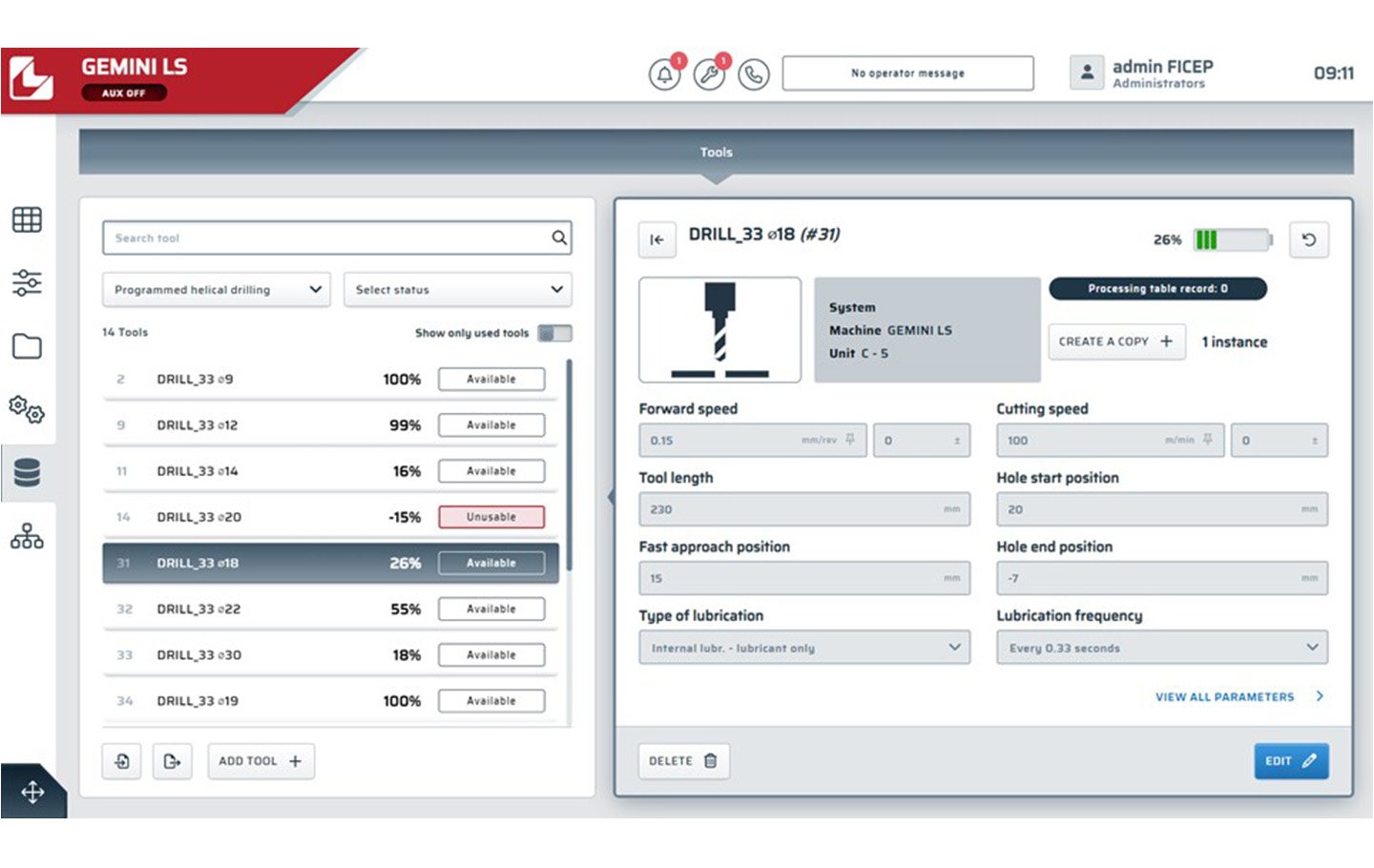
Among the cases Already deployed in the plate processing sector, FICEP machines integrated with the Steel Projects PLM are able to provide high-value predictive information. A concrete example concerns the automatic evaluation of tool wear and recommendations for early replacement.
When the correlation between monitoring data and job information signals the need for an intermediate intervention, the system alerts the operator before wear can compromise job execution.
This allows the customer to schedule the replacement at the most appropriate time – for example before a less supervised night shift – avoiding unplanned downtime and safeguarding production continuity and delivery compliance.
ENERGY OPTIMIZATION AND DIGITAL ECOSYSTEM INTEGRATION
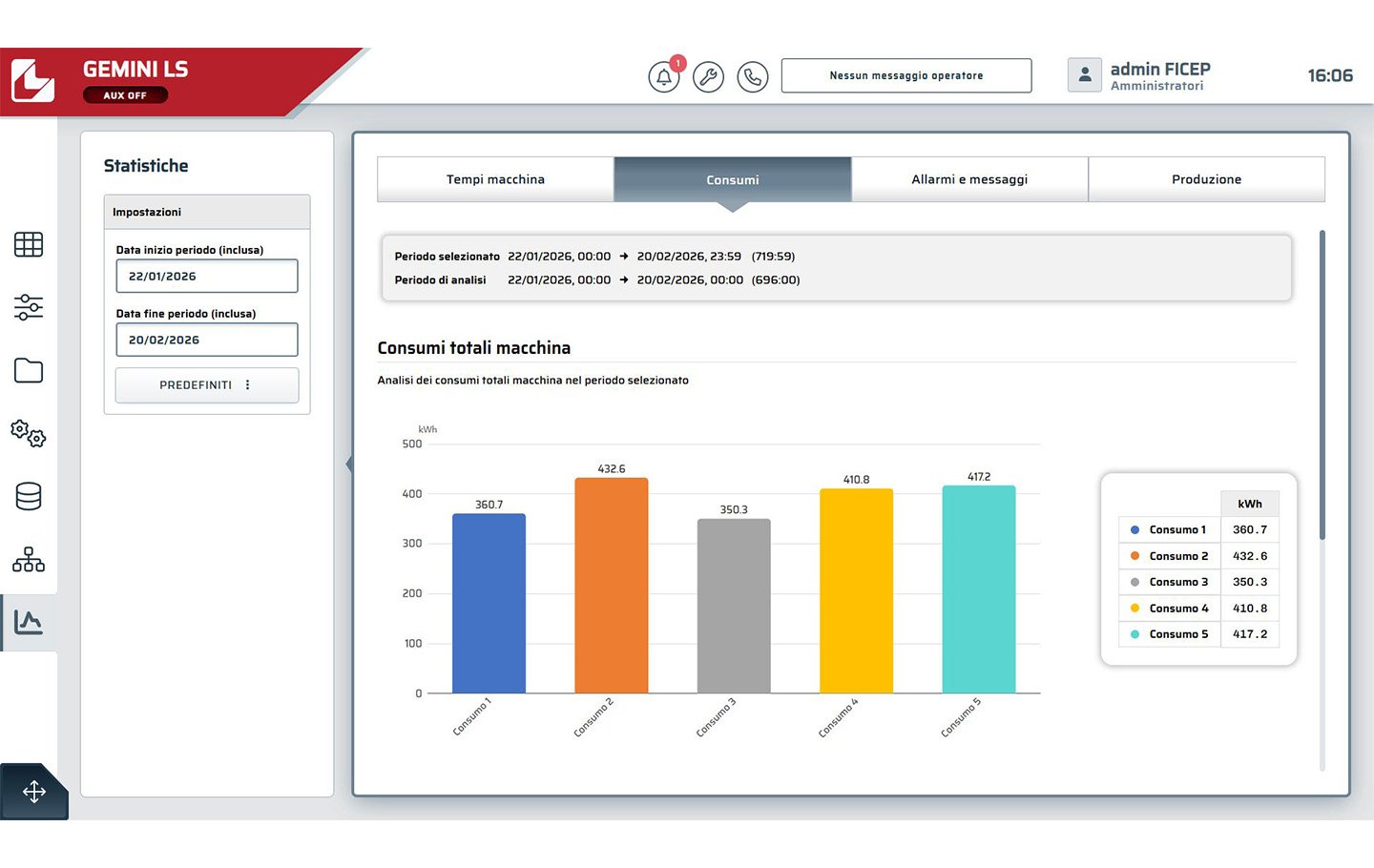
Artificial intelligence also finds application in energy management. Optional hardware and software modules enable consumption monitoring by line, machine, individual component and process phase, allowing the valuation of production costs, identification of waste and the definition of reduction strategies aligned with Industry 5.0 and ESG objectives.
Secure integration with ERP systems and local or remote monitoring platforms, together with the ability to embed proprietary or third-party web components in the HMI for device diagnostics and accessory modules, helps create an open and scalable digital environment, ready to support increasingly advanced applications.
CHALLENGES FOR THE ADOPTION OF DATA-DRIVEN TECHNOLOGIES
Despite their potential, the large-scale adoption of predictive technologies in structural fabrication still faces certain limitations. The first relates to the production context: data-driven functionalities are better suited to standardized and automated manufacturing, whereas highly variable and unstructured processes require larger volumes of data to ensure reliable algorithm training.
The second factor is the availability of meaningful data in sufficient quantity. Systematic connection of machines to local and cloud databases capable of accumulating and processing large amounts of information is not yet universally widespread.
To these aspects are added the costs of infrastructure, communication, sensorization and cloud services, as well as the need to ensure high cybersecurity standards, which are also subject to regulatory requirements.
In this area, FICEP focuses on an integrated infrastructure – hardware, software and functional – designed to ensure operational continuity and security, with measurable returns in terms of equipment availability and productivity, energy consumption reduction, lower maintenance costs and improved quality.
Photo gallery


Questions?
For any question, request or proposal, please do not hesitate to write us
or book one online appointment with one of our experts.


